


If you haven’t already, meet Oishii. They sell strawberries. How could it be more simple as a product? There’s really no education needed to sell strawberries on any normal day…
Except when your strawberries are 1,000% more expensive than the average box of strawberries. We’re talking $10-$15 for 8-10 strawberries. At best that’s $1.00 PER BERRY. You would think the lord himself would have to grow and deliver these boys by hand for that to be a reasonable price.
91k followers on insta, endless glowing reviews and hundreds of retail doors across the US says they made it work.
So how do you make $15 strawberries make sense? I’ll be honest, on day 1 of writing this, my initial notes looked like this:
- Social media status symbol
- Gift-able conversation starter
- Transparent sourcing
- Lots of focus on the providence & process to help me sell the story to my friends
Whilst these still stand up, after 3 days of research, that doesn’t even scratch the surface of what makes this brand so special.
Story
In passing this brand on socials, Oishii could very easily be seen as a cash grab. An unrealistic, influencer forward brand designed to ruffle feathers, polarise opinion and sell on novelty. Like I said, on day 1 that’s kinda how I felt. An incredibly positioned status symbol poised for social media & gifting. Even if we stop there, to the right people this somewhat justifies $15 a box. But after digging a little deeper, I came across Oishii’s CEO Hiroki Koga giving a TED Talk.
Wow.
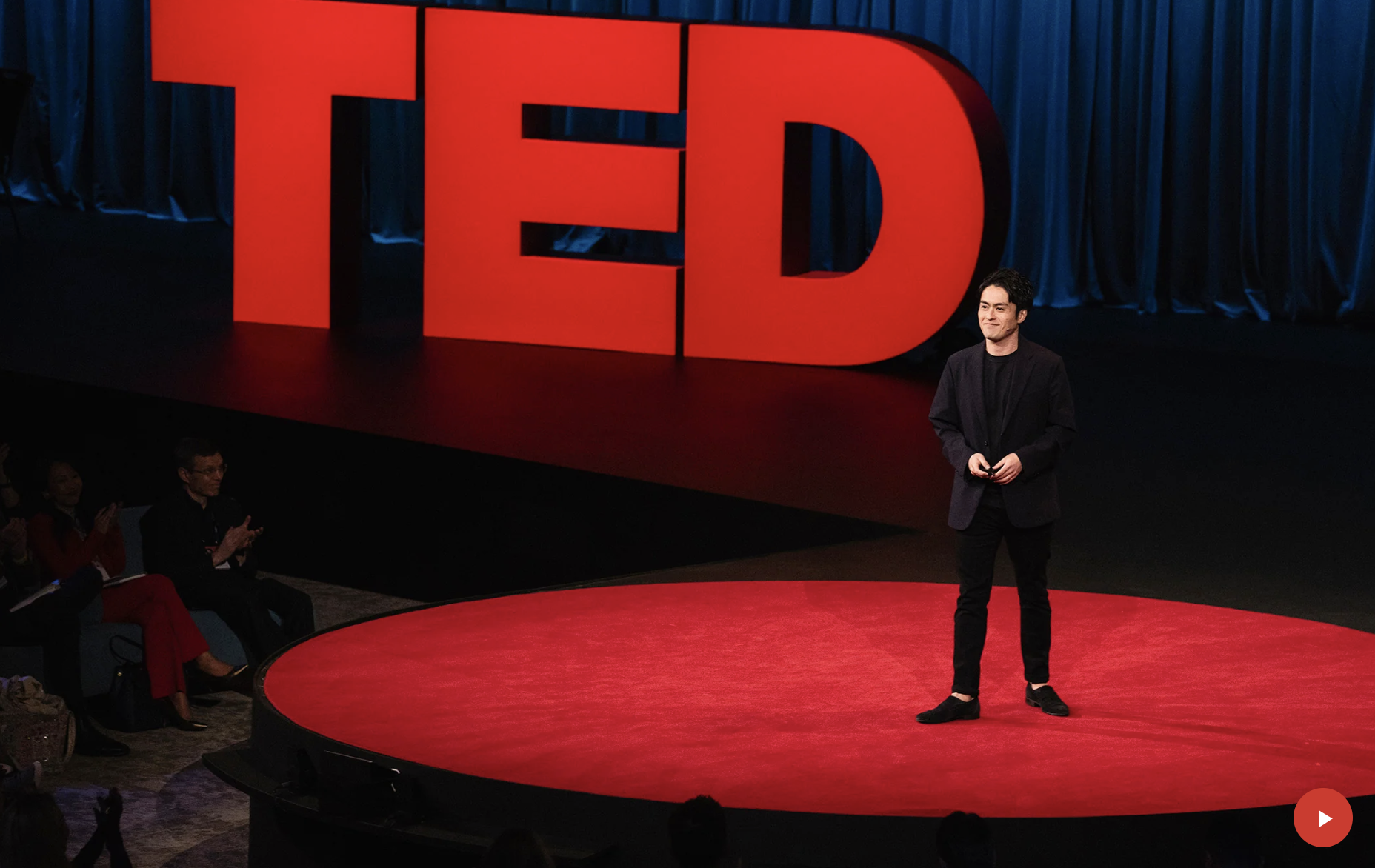
If you’ve ever seen this product and shrugged it off with the same attitude as I had, watch the TED talk.
Hiroki talks in depth about the ritual of strawberries in gifting and celebrating special occasions in Japan. He goes on to talk about the very specific conditions in which they’re grown there that make them 3x sweeter, and that in Japanese culture they are considered the king of fruit. Interestingly these perfect conditions mean that strawberries can be grown & sold by varietal, with most people in Japan able to name a multitude of different Strawberries and their attributes.
Now, this alone doesn’t justify $15 a box to most people, but it’s a very good starting point.
He’s communicating depth & authenticity, rich cultural storytelling around tradition, intrigue around flavour, with a real outcome for customers (3x sweeter, various flavour profiles). He essentially repositions what the Western world has long considered a commodity as a luxury – this is the goal of positioning.
But he doesn’t stop there. He introduces the idea of Mission.
Mission
At a high level, the mission reads something like:
- Solving the failing seasonal agricultural system.
- Massively improving the quality & taste of American strawberries.
- Bringing those special Japanese conditions to the US via vertical farming solutions.
To the right people, this is enough. Sustainability, vertical farming, solving agricultural issues, using less land for more yield, increased efficiency.
They even pioneered the right conditions for bees to happily pollinate plants in their vertical farming facilities – something that was previously thought to be impossible.
Why is any of this important? Well, we’ve now established a benefit bigger than the product. Something incredibly impactful that their customers get to be a part of. If I buy these strawberries, I’m directly contributing to a better future, planet, ecosystem. That’s a story I wanna tell when I bring people over for dinner and serve them a single fancy-ass Strawberry each for dessert.
Then Hiroki hits us with the following: “They used to go for $50 per pack five years ago. Now they’re $10. We came here in 5 years, so you can probably imagine where we can get to in another 5 years. We might even be cheaper than conventional products.” The image on screen shows the prices (adjusted for inflation) of innovative tech products at their first launch, giving the audience a real reason to believe.
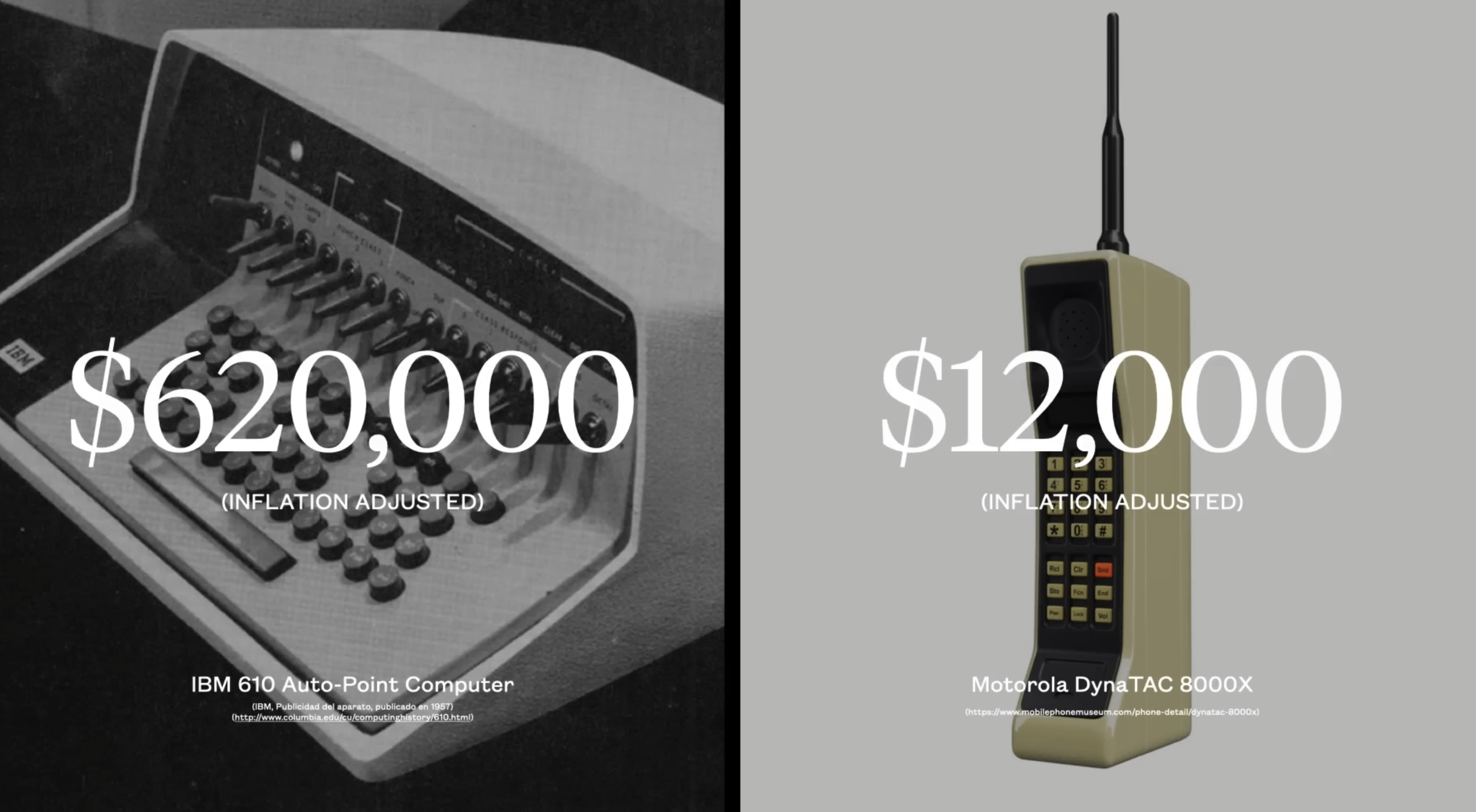
I know what you’re thinking. This is supposed to be about addressing price sensitivity at retail, this is just saying “it will get cheaper in the future” but this is all part of the story and mission.
Every business owner knows that with economies of scale, cost of goods goes down, which allows you to charge less and reach more people. Hiroki is simply communicating that benefit clearly to his audience. Believe in my product, my mission, my story and one day everyone will be able to afford this incredible fruit.
A real mission, vision and reason to believe in your brand cannot be understated.
A damn good pack of $10 strawberries might be enough for customers gift once and never engage with the brand again, but combine that with an authentic narrative, cultural roots, rich story telling, an inspiring mission and vision, and a plan to achieve it and watch as people line up to wave your flag over and over again.

Packaging
Now let’s get into the tangible, the whole point of this series is to provide actionable steps to communicate your thing when you’re not there to do it. It feels impossible to communicate everything we’ve just discussed on a pack of strawberries without any of the context provided by a 10 minute TED talk or 3 days of research, and yet Oishii somehow manages it with clarity, authenticity & restraint.
To make this super clear, let’s revisit everything we’ve discovered about Oishii so far in a bullet point list:
- Premium product
- 3x sweeter than normal strawberries
- Massively improved taste
- Grown in special conditions previously unavailable in the US
- Japanese cultural roots and rituals associated with product
- Considered the king of fruit
- Gifted for special occasions and celebration
- Introduction of varietals with flavour and texture notes
- Tech forward innovative agricultural mission
- Future vision of accessible, affordable, delicious fruit for all
Now let’s break down how they’ve prioritised & distilled only the most important points from that list on pack using a “show, don’t tell” methodology.
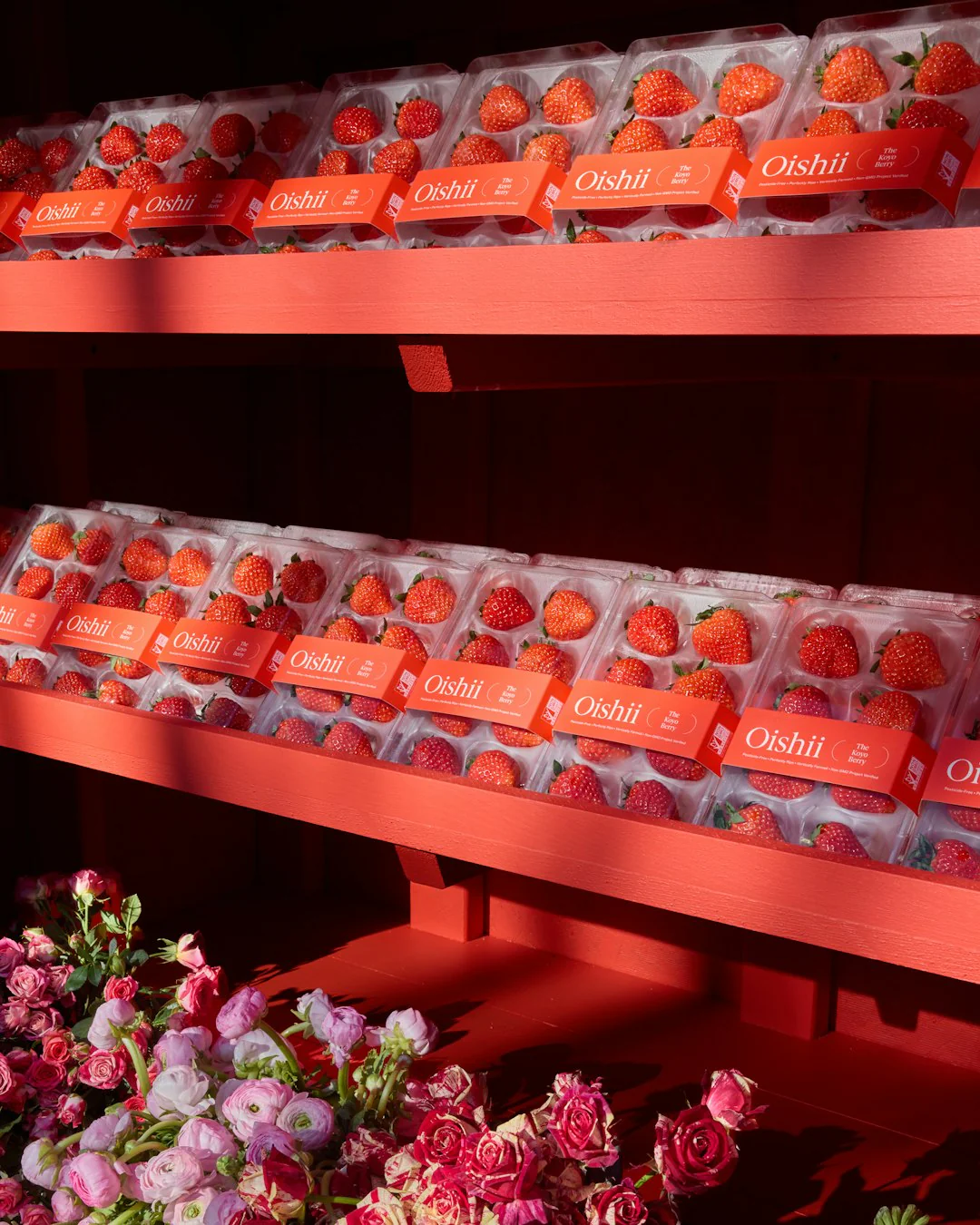
Oishii employs a clear plastic box, with an inner form that holds strawberries perfectly in place. No strawberry touches another. This aspect of the box draws from confectionery gifting in its layout, immediately helping customers associate it with a more elevated, gift-able product.
This subtle cue subconsciously ties back to the use of strawberries in Japanese culture. It communicates the intentional nature of the brand by giving everything a real sense of space, simplicity & purpose.
Japanese design principles are also found throughout the box layout: Kanso (simplicity), Fukinsei (asymmetry) and Shizen (naturalness or connection to nature) all feature as prominent design choices, again communicating, without words, the cultural origins of the product.
A single strip of white or red card denotes different varietals in a minimal, serif typeface alongside the logo. This restraint in design, perfection in layout, and lack of over-explanation reads premium product through and through.
Copy
The only visible copy on the box reads: “The Koyo Berry (meaning ‘elated’ in Japanese), has a bright, sweet flavour coupled with a subtle tartness that awakens the senses. With a slightly firm texture, this berry conjures sweet summer memories and is the perfect start to a bountiful breakfast or as a nutritious snack. Always in Season: Spring, Summer, Fall, and Winter”
This copy does an incredible job of communicating a number of complex ideas. It speaks to the concept of varietals & flavour notes in strawberries, a relatively novel idea in Western culture. It intertwines both the rational & emotional benefits of the product effortlessly, giving a sense of brand, depth, flavour & tradition. Then the simple “Always in season: Spring, Summer, Fall, and Winter” line, comes in to deliver the good news about their innovative farming process – with absolutely 0 mention of the process.
I don’t need to know how the sausage is made at retail, I just need to know how it benefits me. If I love the product, I’ll deep dive its origins later whilst I’m enjoying all of the brands direct & implied promises.
Incredible.
Takeaways
The biggest takeaway for me, besides falling completely in love with Oishii and their expert positioning, is that a huge amount of what I discovered about this brand, is clearly communicated on pack through thoughtful, emotionally intelligent design. Barely any of it is written at face value. Almost all of it is felt, understood and understated.
Oishii has thoughtfully prioritised, and communicated with clarity, only the essential information in the most elegant, badass way possible.
A true lesson in walking the walk.
P.S. We didn’t even touch on their incredible social strategy, giving strangers on the street an Oishii strawberry to try and filming their always-pleasantly-surprised reactions. Check that out here.